
Solving the Grand Challenges of Healthcare AI: The Trust Stack for the Regulatory-Grade Era [Keynote]
For over a decade, healthcare AI has been stalled by the same “permanent” hurdles: fragmented data, untrustworthy reasoning, and an inability to scale safety. The transition to Agentic AI and multi-step reasoning models has intensified these challenges, creating more complex failure modes – although these same capabilities also finally provide the key to the solution. These advanced models enable automated, high-fidelity solutions where previously only manual curation or exhaustive expert validation could suffice. This keynote examines the historical gaps that have plagued previous implementations and presents the architecture now required to achieve a Regulatory-Grade enterprise environment.
Closing the Data & Readiness Gaps with Patient Journey Intelligence (PJI)
Historically, AI projects failed because the underlying data was never truly “AI-Ready.” We explore how John Snow Labs’ Patient Journey Intelligence platform finally addresses the three core bottlenecks:
- The Accuracy Gap: Traditional projects often relied solely on structured data, missing the critical clinical facts buried in unstructured narratives, pathology, and imaging. This leads to inaccurate risk scores and skewed models. Today’s reasoning models can automatically synthesize raw multimodal data, adjudicating longitudinal and conflicting facts to create a high-fidelity, whole-patient view that reflects clinical reality.
- The Data Engineering Gap: Organizations have historically wasted tens of man-years duplicating partial solutions for de-identification, NLP, and imaging curation. This fragmented approach created expensive silos of uncoordinated, mismatching data. PJI replaces these “bespoke” failures with a unified, automated pipeline that creates a single, coherent source of truth.
- The AI Governance Gap: To move from pilot to production, data must meet the highest bar for provenance and validation. We discuss how this stack aligns with the FDA Guidance on Use of Real-World Data and Real-World Evidence to Support Regulatory Decision-Making, ensuring that data used for clinical evidence is as rigorous as that of a controlled trial.
Scaling the Trust Stack: From Governance to Guardianship
Even with perfect data, health systems face a “Safety Scaling” problem. We demonstrate how the Pacific AI platform provides the enterprise-grade infrastructure to manage this risk across three critical layers:
- The Governor: Solving the overhead of scaling. By automating system and vendor risk assessments, the Governor allows health systems to vet and deploy hundreds of AI applications safely and cost-effectively, removing the manual bottleneck of traditional committee-based reviews.
- The Gatekeeper: Hardening the system through automated testing and CI/CD. This layer moves beyond simple accuracy to test for medical cognitive biases (anchoring, confirmation, availability), medical ethics, and strict regulatory compliance (e.g., California AB 489).
- The Guardian: Implementing active oversight. Functioning like a Senior Doctor overseeing a Junior Resident, the Guardian acts as a real-time, independent reviewer that probes the “hidden middle” of AI reasoning to verify intent and safety before it ever reaches the clinician.
The technology for safe, autonomous healthcare AI is no longer a future concept – it is now available off-the-shelf. By combining a robust secondary-use data foundation with an active governance and monitoring stack, organizations can finally move from fragile, manual pilots to robust, scalable, regulatory-grade clinical production.
About the speaker
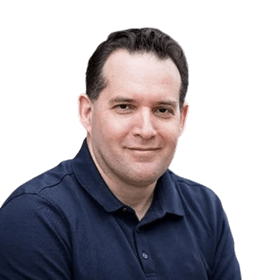
David Talby
CEO at John Snow Labs
David Talby is the CEO at John Snow Labs and Pacific AI, helping companies apply artificial intelligence to solve real-world problems in healthcare and life science.
David has extensive experience building and running web-scale software platforms and teams – in startups, open-source projects, for Microsoft’s Bing in the US and Europe, and to scale Amazon’s financial systems in Seattle and the UK.
David holds a Ph.D. in Computer Science and Master’s degrees in both Computer Science and Business Administration.
He was named USA CTO of the Year by the Global 100 Awards in 2022, Game Changers Awards in 2023, and ACQ5 Global Awards in 2025.